


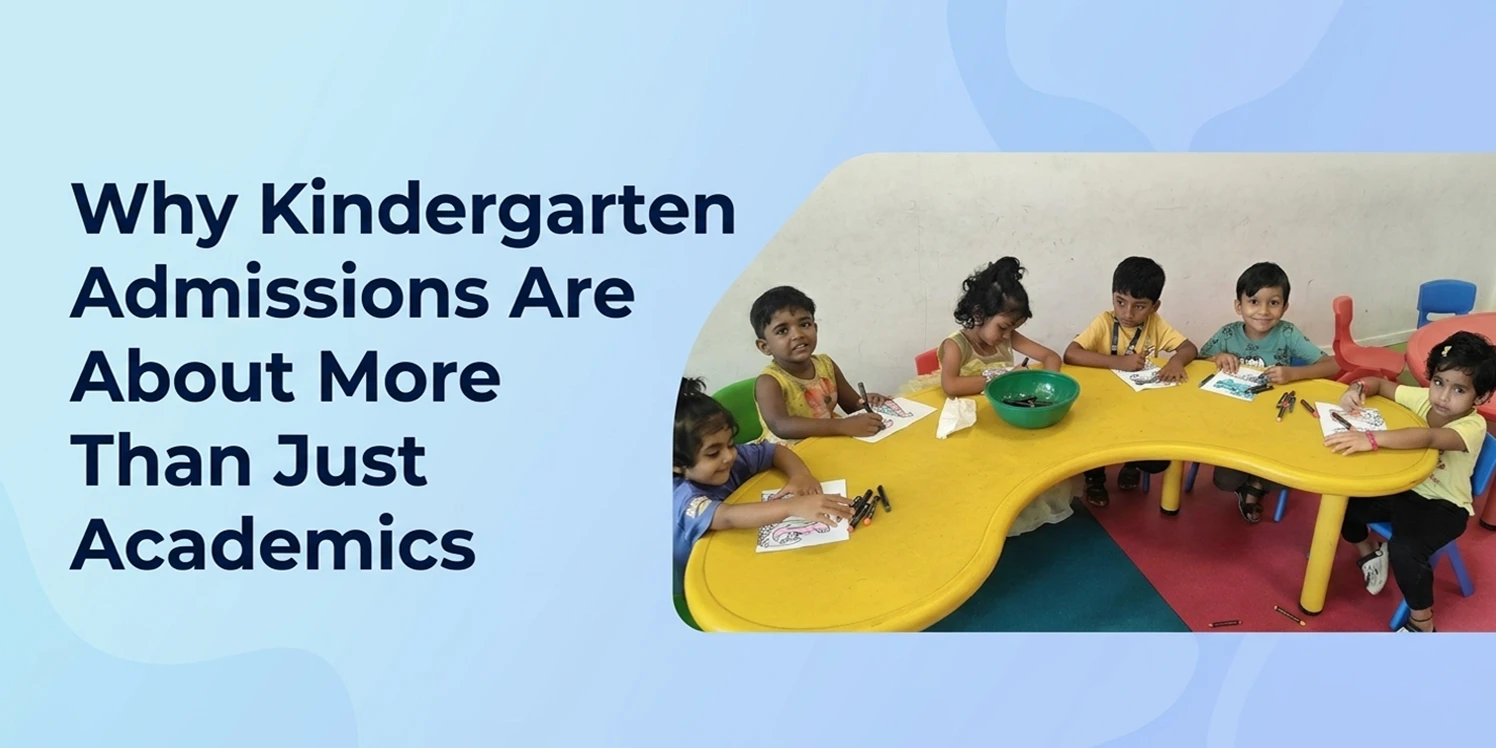
For many parents, kindergarten admission feels like the first real milestone in their child’s education journey. It is often approached with questions around curriculum, facilities, and academic readiness. While these are important, they are only one part of the picture.
Kindergarten is not simply about preparing children to read and write. It is about helping them feel comfortable in a new environment, building confidence, encouraging curiosity, and developing the ability to learn independently. These early experiences shape not only what children learn, but how they approach learning for years to come.
For parents exploring options such as the best kindergarten near Kottivakkam or evaluating kindergarten admissions in ECR and OMR, understanding this broader perspective can make the decision more meaningful.
The Real Purpose of Kindergarten
Kindergarten is often seen as a preparatory stage for primary school. However, its purpose is much deeper than preparing children for the next grade.
At this stage, children are:
- Experiencing structured learning for the first time
- Learning to be independent outside their home environment
- Developing the ability to listen, follow instructions, and participate
- Building early friendships and social awareness
- Exploring ideas through observation and interaction
A well-designed early years curriculum focuses on experiential learning, helping children build the skills and confidence needed to engage meaningfully with learning over time.
Why Emotional Security Comes First
One of the most important, yet often overlooked, aspects of kindergarten admissions is emotional readiness.
A child who feels safe and comfortable in the classroom is more likely to:
- Participate in activities without hesitation
- Ask questions and express ideas freely
- Build positive relationships with peers and teachers
- Adapt to routines with ease
Without this emotional foundation, even the most well-structured academic programme may not have the desired impact.
Parents searching for the best kindergarten schools in Tambaram often prioritise nurturing environments that help children feel supported before they are expected to perform.
Learning Through Play and Exploration
Play is not a break from learning. It is one of the most effective ways children understand the world. Through play-based experiences, they explore, experiment, and develop essential skills naturally, without pressure.
Common play-based experiences include:
- Storytelling and imaginative role play
- Building and construction activities
- Art, music, and creative expression
- Group games that encourage teamwork
- Hands-on exploration of materials
These activities support cognitive development, creativity, and communication skills. They also help children develop a natural interest in learning.
Parents exploring kindergarten admissions in ECR and OMR often prefer programmes that integrate play into everyday learning, creating a balanced and engaging environment for young learners.
Building Strong Communication Skills
Language development is a key focus during the kindergarten years. Children begin to understand how to express their thoughts clearly and engage in meaningful conversations.
A strong early years curriculum supports communication through:
- Storytelling and reading sessions
- Group discussions and sharing time
- Songs, rhymes, and interactive activities
- Exposure to new vocabulary in context
When children are encouraged to speak and listen actively, they build confidence in expressing themselves. This confidence supports overall academic progress, while strong communication skills also enhance learning across subjects.
Early Numeracy Without Pressure
Mathematical understanding begins much earlier than formal schooling. In kindergarten, children are introduced to numbers in a way that feels natural and engaging.
Instead of memorising concepts, they explore ideas through:
- Counting everyday objects
- Sorting and grouping activities
- Recognising patterns and shapes
- Games that involve numbers and logic
- Real-life applications of basic concepts
This hands-on approach helps children understand numbers rather than simply recall them.
Parents considering a CBSE School in Padur often prefer programmes that introduce numeracy gradually and meaningfully, helping children build strong foundations without feeling overwhelmed.
Social Development and Peer Interaction
Kindergarten is often a child’s first experience of being part of a larger group. This makes social development an important part of early education.
Through daily interactions, children learn:
- How to share and take turns
- How to listen to others
- How to express their feelings appropriately
- How to work together in group activities
- How to build friendships
These experiences help children develop empathy, cooperation, and respect for others.
Parents searching for the best kindergarten near Kottivakkam often consider how well a school supports these social interactions, as they play a vital role in a child’s overall development.
Preparing Children for the Transition to Primary School
Kindergarten is not only about the present. It also prepares children for the transition into primary school. A well-balanced programme introduces structure gradually, helping children adapt to routines and expectations.
By the time children move to primary school, they are likely to have developed:
- Basic literacy and numeracy skills
- The ability to follow instructions
- Confidence in participating in classroom activities
- Independence in handling simple tasks
- Social skills needed for group learning
This preparation ensures children approach primary school with confidence, not anxiety. CBSE School in Padur helps ease this transition with structured, supportive programmes.
What Parents Should Really Look For
When it comes to kindergarten admissions, focusing only on academics may not give a complete picture.
Instead, parents should consider a broader set of factors, such as:
- A safe and welcoming environment
- Teachers who understand early childhood development
- A balanced early years curriculum
- Opportunities for play, creativity, and exploration
- A structured pathway into primary education
Families exploring kindergarten admissions in ECR and OMR or evaluating the best kindergarten schools in Tambaram often find that these elements make a lasting difference.
A Strong Beginning Shapes the Future
The kindergarten years go beyond preparing children for the next grade, shaping how they experience learning. When encouraged and supported, children develop a positive attitude towards education, becoming more confident, curious, and open to exploring new ideas.
At Shraddha Little Champs, this understanding forms the foundation of the early learning programme. As part of Shraddha Children’s Academy, the focus is on creating a nurturing environment where children can grow at their own pace while building essential skills for the future.
By combining structured learning with play-based experiences and emotional support, the programme aims to provide a balanced and meaningful start to a child’s educational journey.
FAQs
1. Why is kindergarten not just about academics?
Kindergarten focuses on overall development, including emotional, social, and communication skills, along with early academic learning.
2. What is an early years curriculum?
An early years curriculum supports holistic development through a combination of language, numeracy, social skills, physical development, and emotional learning.
3. How do I choose the best kindergarten near Kottivakkam?
Look for a school that offers a nurturing environment, experienced teachers, balanced learning methods, and a focus on both academic and emotional development.
4. Why is play-based learning important in kindergarten?
Play-based learning helps children understand concepts naturally while building creativity, confidence, and problem-solving skills.
5. When should parents begin kindergarten admissions in ECR and OMR?
It is advisable to start researching schools a few months in advance, as admissions in these areas can be competitive.
6. How does kindergarten prepare children for primary school?
Kindergarten builds foundational skills in communication, numeracy, social interaction, and confidence, making the transition to primary school smoother.