


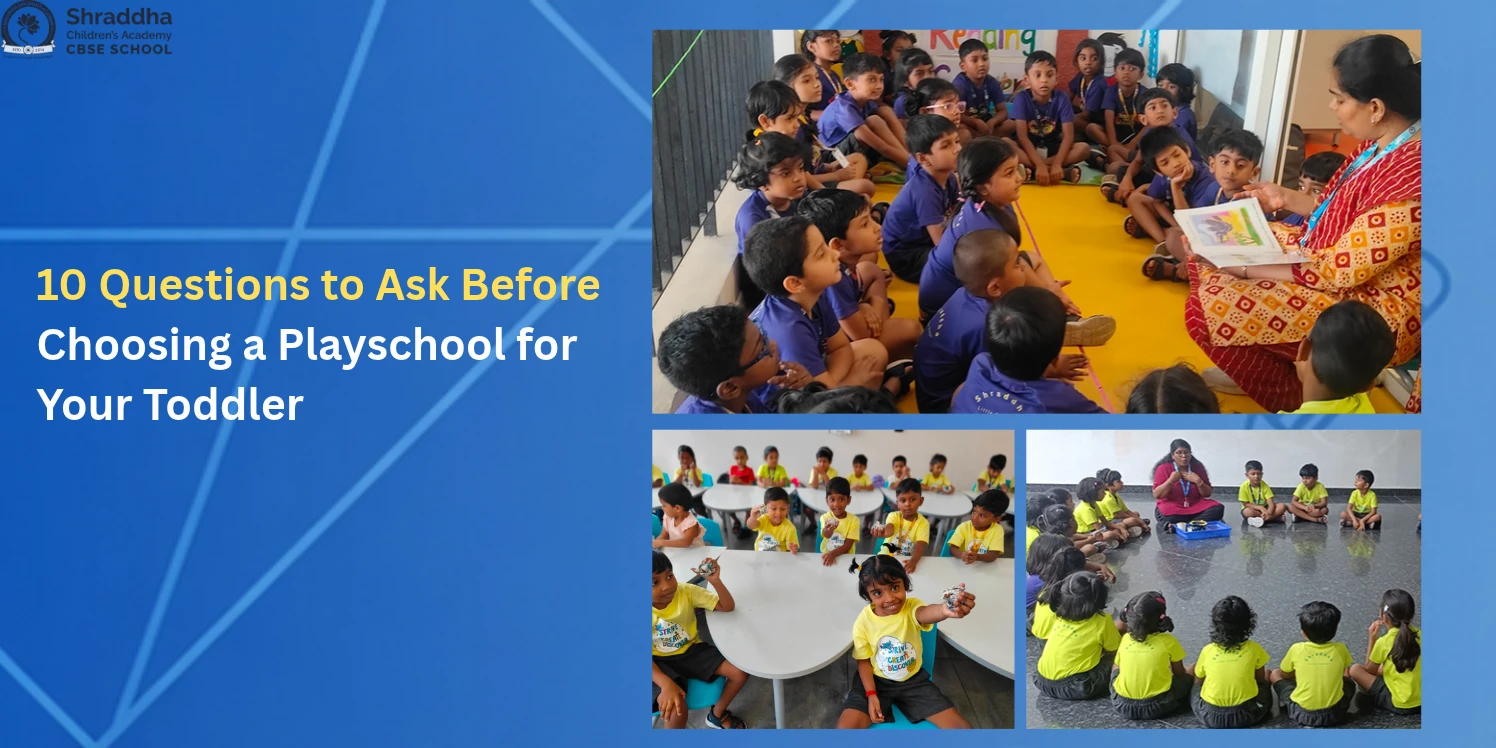
Choosing a playschool is an important step for both toddlers and parents. It may be your child’s first experience of spending time away from home, meeting other children and following a daily routine. Naturally, parents want to know whether their child will feel safe, receive attention and enjoy learning.
With several options available, choosing a school requires more than comparing facilities and fees. Its teaching approach, teachers, safety practices and communication with parents deserve equal attention.
Before making a decision, visit shortlisted campuses and ask questions that help you understand your child’s everyday experience. Here are ten questions to guide your search.
1. What Is the School's Approach to Early Learning?
Ask how the school introduces learning to young children. During the early years, toddlers learn through play, exploration, observation and interaction. Activities such as storytelling, music, art and movement encourage curiosity and creativity.
Find out how the school balances guided activities with independent exploration. The programme should be age-appropriate and allow children to develop at their own pace without unnecessary academic pressure.
2. How Experienced Are the Teachers?
Teachers help children feel comfortable as they adjust to a new environment. Ask about their qualifications, early childhood training and experience working with toddlers.
Also, understand how they handle everyday situations. How do they support children who are upset at drop-off, hesitant to participate or learning to share?
During a visit to a Playschool in Kottivakkam, observe whether teachers communicate patiently, listen to children and offer encouragement.
3. What Safety Measures Does the School Follow?
Toddlers are curious and need close supervision while exploring. Ask about entry and exit procedures, visitor access, classroom supervision and emergency arrangements. Check whether first-aid facilities are available.
Look around the campus too. Furniture, toys, washrooms and play equipment should be child-friendly and well-maintained. Find out how children are supervised during outdoor play and classroom activities.
4. How Are New Children Helped to Settle In?
Starting school can bring separation anxiety or uncertainty. While some children adjust quickly, others need more time to become comfortable with unfamiliar people and routines.
Ask whether the school follows a settling-in process. Find out how teachers support children who are upset or hesitant and how parents are involved during the initial days.
A gradual transition can help children become familiar with their surroundings and build confidence.
5. What Does a Typical School Day Include?
Request a sample daily schedule to understand how the school organises its activities. A balanced routine may include storytelling, rhymes, creative activities, outdoor play, group interactions, meals and rest.
Children need a predictable routine, but it should not feel overly structured. Ask whether the schedule allows enough time for independent exploration, movement and interaction.
6. How Does the School Support Social and Emotional Development?
Playschool is often where children begin practising important skills such as sharing, taking turns, expressing feelings and interacting with peers.
Ask how teachers encourage these behaviours through group activities and everyday experiences. Also, understand how they guide children through disagreements or moments of frustration.
If you are looking for a Playschool Near Padur, consider whether the programme provides opportunities for children to build friendships, communicate and gradually become more independent.
7. What Is the Student-to-Teacher Ratio?
The number of children in a classroom can influence the attention each child receives. Ask about the student-to-teacher ratio for your toddler’s age group and whether support staff are available.
Find out how teachers monitor participation, understand individual needs and assist children with daily routines. Individual attention can help young learners feel supported as they adjust to school.
8. How Are Hygiene and Health Concerns Managed?
Young children need assistance with personal hygiene and may not always be able to explain when they feel unwell. Ask how frequently classrooms, toys and shared surfaces are cleaned.
Check whether washrooms are child-friendly and regularly maintained. Also, clarify the school’s procedures for illness, medication, first aid and emergencies.
Find out how parents are informed if a child becomes unwell or needs medical attention during school hours.
9. How Will the School Keep Parents Informed?
Regular communication helps parents understand how their child is settling in and participating in activities.
Ask whether updates are shared through parent-teacher meetings, messages or progress reports. Find out how frequently you can speak with teachers and whom to contact if you have concerns.
A good partnership between parents and teachers makes it easier to support a child’s development at school and home.
10. What Are the Admission Requirements and Practical Details?
Before applying, check the minimum age criteria, application dates, required documents, fee structure and available programmes. Understand the school timings, holidays, transport arrangements and additional charges.
Location also matters, particularly for young children getting used to a new routine. Parents considering a Playschool in West Tambaram should check campus accessibility and travel arrangements.
For parents considering a Playschool in Kottivakkam, checking the campus location, school timings and admission requirements can help make the decision easier.
If you are planning Playschool Admission in Chennai, compare suitable options and confirm the latest eligibility and admission details directly with each school.
Why Should You Visit the Campus Before Deciding?
Websites and brochures provide an introduction, but visiting a campus gives you a better understanding of its everyday environment.
Observe how teachers interact with children, whether classrooms are organised and how activities are conducted. Check the play areas and ask questions about daily routines and supervision.
A campus visit also allows you to speak with the admissions team and understand whether the school’s approach matches your child’s needs.
Conclusion
Choosing a playschool is about finding an environment where your toddler feels secure, explores new experiences and begins learning with confidence. Teaching methods, teacher support, safety, hygiene and parent communication all deserve consideration.
Take time to compare schools, visit their campuses and ask questions beyond basic facilities. Shraddha Children’s Academy has campuses in Kottivakkam, Padur and Tambaram, where parents can explore early years programmes and understand the learning environment.
Explore the early years programmes at Shraddha Children’s Academy and enquire about the right campus for your child.
FAQs
1. What is the right age to start playschool?
The right age depends on a child’s readiness and the school’s eligibility criteria. Check the programme’s age requirements before applying.
2. How can I prepare my toddler for the first day?
Introduce simple routines, read stories about starting school and encourage small independent tasks. Speak positively about the experience and give your child time to adjust.
3. What should I observe during a playschool visit?
Notice teacher-child interactions, classroom cleanliness, safety arrangements and age-appropriate activities. Ask about supervision and parent communication.
4. Why is play important in early learning?
Play gives children opportunities to explore, communicate, solve simple problems and interact with others. It supports development through enjoyable, age-appropriate experiences.