


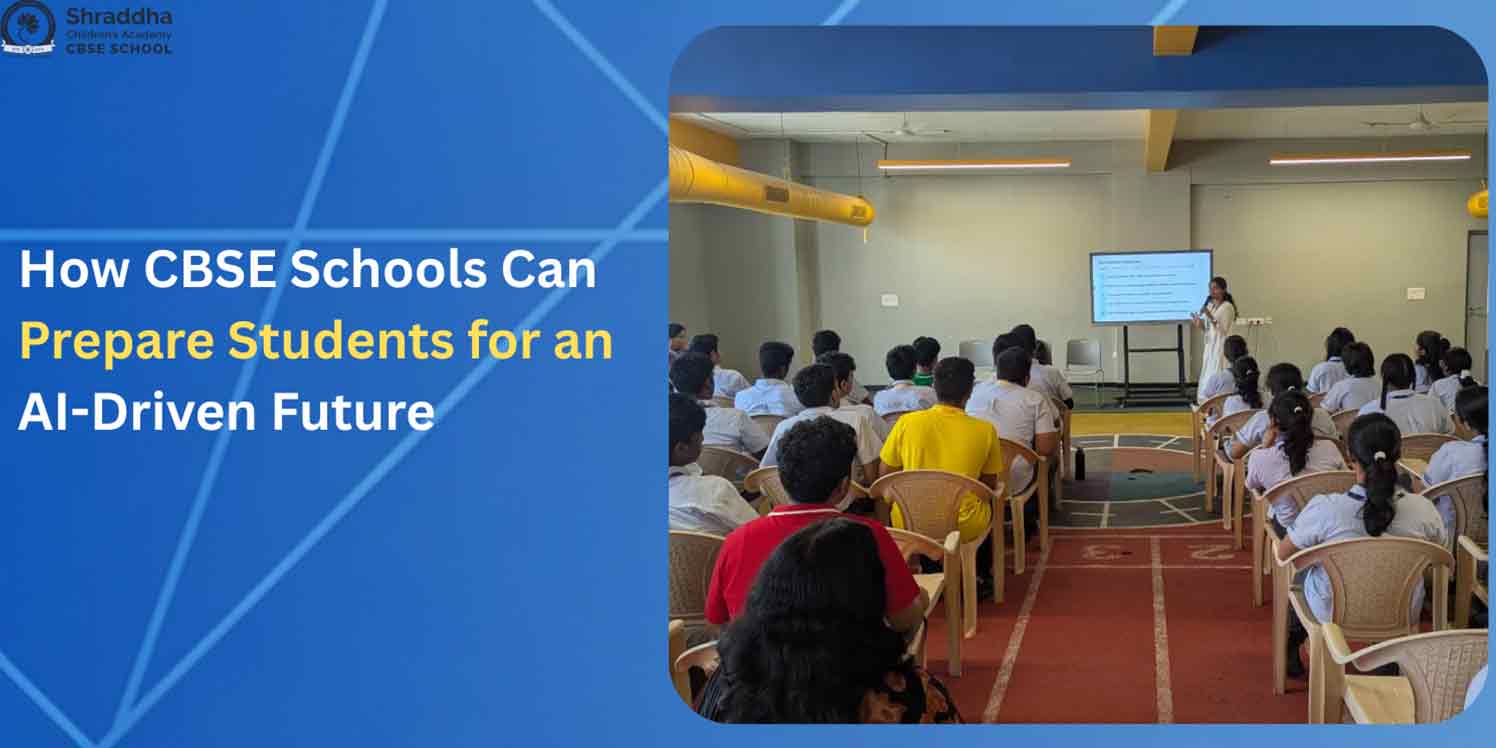
Artificial Intelligence is already shaping how people work, communicate, learn, and solve problems. For today’s students, the key question is not whether they will use AI, but whether they will know how to use it responsibly and effectively.
As technology evolves, distinctly human qualities such as curiosity, critical thinking, creativity, communication, collaboration, and ethical judgement are becoming even more valuable.
This shift is encouraging schools to move beyond subject knowledge and develop the competencies students need to adapt and innovate. Preparing children for an AI-driven future means building digital awareness alongside distinctly human skills.
Why the Top CBSE Schools in South Chennai Are Preparing Students for More Than Technology
Preparing students for an AI-driven future involves more than introducing technology in the classroom. It requires independent thinking, problem-solving, clear communication, and the ability to adapt.
The top CBSE schools in South Chennai combine academic strength with competency-based learning, helping students apply concepts rather than simply memorise them. Parents exploring CBSE schools in Tambaram, near Padur, and in Kottivakkam are also looking for schools that prepare children for a rapidly changing world, not just for examinations.
Human Skills Will Matter More Than Ever
Artificial Intelligence can process information quickly, identify patterns, and generate responses within seconds. However, it cannot replace the qualities that make us uniquely human.
Schools, therefore, have an important responsibility to help students develop skills such as:
- Critical thinking to evaluate information
- Creativity to generate original ideas
- Communication to express thoughts clearly
- Empathy to understand different perspectives
- Adaptability to respond to change
These skills help students use technology wisely rather than depend on it entirely. As AI continues to evolve, the ability to think independently and make informed decisions will remain one of the most valuable strengths a learner can possess.
From Memorisation to Competency-Based Learning
One of the most significant shifts in CBSE education is the move towards competency-based learning. Instead of assessing only what students remember, schools are increasingly encouraging them to demonstrate how they understand, analyse, and apply concepts in different situations.
This approach is supported through:
- Inquiry-based learning that encourages questioning and investigation
- Experiential learning that connects concepts with real-life situations
- Collaborative activities that build teamwork and communication
- Project-based tasks that strengthen creativity and problem-solving
In an AI-driven world, the ability to interpret information and apply knowledge meaningfully is more valuable than memorising textbook answers.
Digital Literacy Is About Responsibility, Not Just Technology
Being digitally literate involves much more than knowing how to use devices or software. Students also need to understand how to engage with technology thoughtfully and responsibly.
Schools play an important role in helping children:
- Evaluate the accuracy of online information.
- Understand how AI-generated content should be used responsibly.
- Respect digital privacy and online safety.
- Recognise the importance of originality and academic integrity.
- Develop responsible digital citizenship.
These habits are strengthened when schools and parents work together. Conversations at home about screen time, privacy, online content, and responsible AI use help students build a balanced relationship with technology.
Preparing Students for Careers That Do Not Yet Exist
As careers continue to evolve with AI and automation, students will need to adapt throughout their working lives. Instead of preparing them for one specific role, schools should help them become lifelong learners who can respond confidently to change.
This includes developing:
- Curiosity to keep learning
- Resilience to overcome challenges
- Collaboration to work effectively with diverse teams
- Communication to share ideas clearly
- Problem-solving to navigate unfamiliar situations
Parents exploring CBSE schools in Tambaram, schools near Padur, and schools in Kottivakkam increasingly recognise that these capabilities are just as important as academic achievement.
Choosing a School That Is Ready for the Future
Technology will continue to change, but the purpose of education remains constant: to help children become capable, responsible, and confident individuals.
When choosing a school, parents can consider whether it:
- Balances academic excellence with competency-based learning
- Promotes inquiry-based and experiential learning
- Develops creativity, collaboration, and communication
- Encourages responsible digital citizenship
- Builds independent thinking and problem-solving
Families exploring the top CBSE schools in South Chennai increasingly view these qualities as essential signs of a future-ready school.
Conclusion
An AI-driven future makes education more important, not less. Schools must nurture critical thinking, creativity, empathy, communication, and adaptability so students can use technology thoughtfully and contribute meaningfully.
At Shraddha Children’s Academy, these competencies are developed through competency-based, inquiry-based, and experiential learning. By combining strong academic foundations with real-world experiences, the school prepares students to become responsible, adaptable, and future-ready learners.
FAQs
1. How is Artificial Intelligence changing school education?
AI is creating new ways to access information, personalise learning, and solve problems while increasing the importance of critical thinking, creativity, and communication.
2. Why is competency-based learning important in an AI-driven world?
It helps students apply knowledge, solve problems, think critically, and adapt to new situations.
3. What skills prepare students for an AI-driven future?
Students need critical thinking, creativity, communication, collaboration, adaptability, digital literacy, and ethical decision-making.
4. Can AI replace teachers?
No. AI can support education, but teachers remain essential for guidance, values, curiosity, and social and emotional development.
5. What should parents look for in a future-ready CBSE school?
Look for academic strength, competency-based learning, digital literacy, responsible technology use, and opportunities for creativity and problem-solving.
6. How does Shraddha Children’s Academy prepare students for the future?
Shraddha Children’s Academy combines strong academics with competency-based, inquiry-based, and experiential learning to develop critical thinking, collaboration, and responsible technology use.