


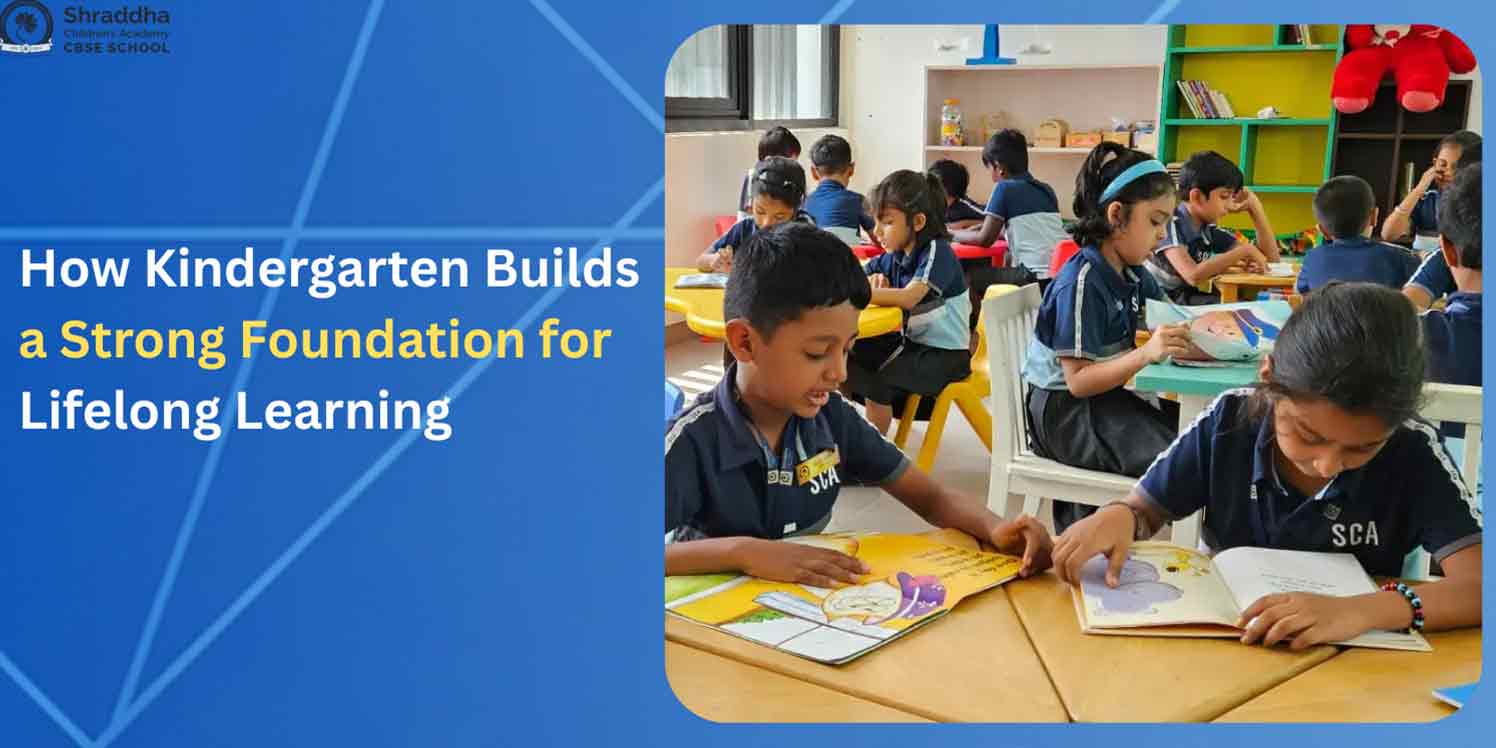
A child’s first experiences at school shape more than early literacy and numeracy. They influence how children ask questions, express ideas, solve problems, and respond to mistakes. During the kindergarten years, children begin developing the curiosity, confidence, communication skills, and resilience that support future learning.
This is why kindergarten plays such an important role in early childhood education. It helps build the habits, attitudes, and abilities that form the foundation for lifelong learning.
Choosing the right kindergarten is about more than the next grade. It is about giving children a confident start and a lasting enthusiasm for learning.
Why the Best KG and Playschool in Chennai Looks Beyond Academics
Kindergarten helps children explore ideas, interact confidently, make decisions, and learn through experience. Through conversation, observation, and discovery, they develop the social, emotional, and thinking skills needed for greater independence.
Parents searching for the best KG and playschool in Chennai increasingly seek a balance of academic, emotional, social, and cognitive development.
Families exploring the best kindergarten schools in Tambaram, schools in Padur, or schools in Kottivakkam also value programmes that build strong foundations beyond early academic milestones.
Curiosity Is the First Step Towards Lifelong Learning
Children are naturally curious, asking questions and observing the world around them. A good kindergarten nurtures this through inquiry-based learning rather than memorisation. By investigating ideas, discussing stories, and exploring everyday objects, children strengthen critical thinking, communication, observation, and problem-solving.
More importantly, they begin to enjoy discovery, developing a positive attitude that supports learning beyond the kindergarten classroom.
Why Play Is Serious Work for Young Learners
For young children, play is one of the most effective ways to understand the world. Through play-based and activity-based learning, they explore ideas, communicate, and build new skills naturally. Blocks develop early mathematical thinking, storytelling strengthens language, and role play encourages creativity, empathy, and social interaction.
Purposeful play also develops concentration, independence, decision-making, and collaboration. As children solve simple challenges and express ideas freely, they build the thinking skills that support future learning.
Parents Are a Child's First Learning Partners
A child’s learning does not stop when the school day ends. Everyday conversations, shared stories, play, and simple activities at home reinforce what children experience in the classroom. When parents and teachers communicate and work together, children receive consistent encouragement to explore, ask questions, and learn with confidence.
This partnership helps build curiosity, independence, and positive learning habits that support their growth well beyond the kindergarten years.
Building Skills That Last Beyond Kindergarten
Kindergarten develops far more than early literacy and numeracy. Through play-based, activity-based, and inquiry-based learning, children build skills that support every stage of education, including:
- Language and communication
- Early literacy and numeracy
- Problem-solving and independent thinking
- Collaboration and teamwork
- Confidence to participate and explore
- Independence in making choices and following routines
These skills develop through classroom experiences that encourage active participation. Parents exploring the best kindergarten schools in Tambaram therefore often seek programmes that go beyond worksheets to build capable, independent learners.
Preparing Children for a Confident Transition to Primary School
The transition to primary school is an important milestone. A well-designed kindergarten programme prepares children academically, socially, and emotionally for this change.
Through play-based and inquiry-based learning, children learn to ask questions, participate, work with others, and view mistakes as part of the learning process. These experiences help them adapt to new routines with greater confidence.
Parents exploring schools in Padur and schools in Kottivakkam therefore often seek programmes that support a smooth transition beyond academic readiness.
What Parents Should Look for During Kindergarten Admissions
During kindergarten admissions, parents should look beyond infrastructure and brochures. Observing the classroom, teacher-child interactions, and overall environment can offer a clearer picture.
Consider whether the school:
- Encourages play-based learning and active participation
- Promotes inquiry, exploration, and activity-based learning
- Values creativity, collaboration, and emotional well-being
- Supports independence and social development
- Keeps children happy, engaged, and involved
Families exploring the best KG and playschool in Chennai or the best kindergarten schools in Tambaram, in Padur, and in Kottivakkam increasingly seek environments that support well-rounded development beyond early academics.
Conclusion
Lifelong learning begins when children are encouraged to explore, ask questions, express themselves, and enjoy discovery. Kindergarten lays this foundation by developing curiosity, independence, resilience, communication, and essential academic skills.
At Shraddha Little Champs, the early years programme of Shraddha Children’s Academy, children learn through play-based, inquiry-based, and activity-based experiences. The programme prepares them for primary school while nurturing curiosity, capability, and a positive attitude towards learning.
FAQs
1. Why is kindergarten important for a child’s development?
Kindergarten builds curiosity, communication, confidence, social skills, and early literacy and numeracy through age-appropriate experiences.
2. How does play-based learning help young children?
It helps children explore, solve problems, collaborate, and express themselves while supporting cognitive, social, emotional, and physical development.
3. What is inquiry-based learning in kindergarten?
It encourages children to ask questions, investigate ideas, and learn through observation and exploration.
4. What should parents look for during kindergarten admissions?
Parents should consider the learning environment, teacher-child interactions, teaching approach, social opportunities, safety, and balance between academics and play.
5. How does kindergarten prepare children for primary school?
It develops confidence, independence, communication, and foundational literacy and numeracy for a smoother transition.
6. How do I choose the right kindergarten for my child?
Look for a nurturing environment, qualified teachers, age-appropriate activities, strong parent communication, and a balanced approach to early education.