


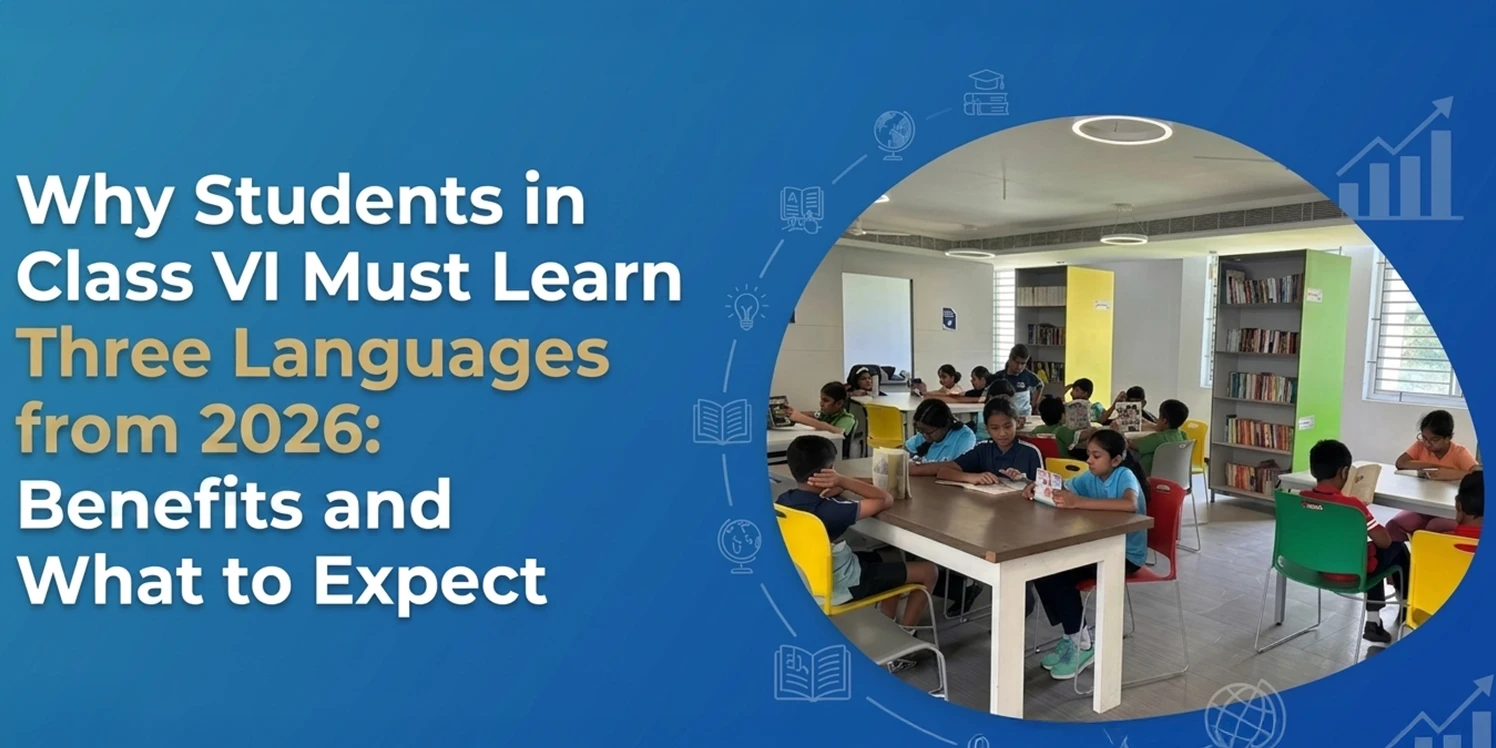
The way children learn is constantly evolving. With the introduction of new academic frameworks, schools are gradually moving towards approaches that prepare students not just for exams, but for life.
The three-language approach has been a part of CBSE education for many years. With recent updates aligned to the National Curriculum Framework 2023, this framework is being strengthened, with the third language now structured more clearly from Class VI and carried forward into higher classes.
For many parents, this raises important questions. Will it be too much for children? How will schools manage this transition? What does this change really mean for students?
Understanding the purpose behind this update helps parents see it not as an added burden, but as a meaningful step towards well-rounded development.
What Does the Three-Language Approach Mean?
The three-language approach has long been part of CBSE education. From the academic year 2026–27, it is being strengthened with a clearer structure from Class VI and continuity into higher classes.
Earlier, the third language was typically taught up to Class VIII. It will now continue till Class X and be reflected in the CBSE board marksheet, applying to students currently in Class VI when they reach their board exams.
The idea remains simple. Alongside the primary and secondary languages, students continue learning an additional language in a more structured manner.
This approach focuses on:
- Strengthening communication skills
- Encouraging cultural understanding
- Supporting cognitive development
- Preparing students for a diverse and interconnected world
Rather than increasing pressure, the aim is to make language learning more continuous and meaningful.
Why Language Learning Matters at This Stage
Class VI is a transition year. Students move from primary learning into a more structured academic environment. At this stage, their ability to grasp new concepts, adapt to learning patterns, and communicate effectively becomes increasingly important.
Learning a third language during this phase offers several advantages.
Improved Cognitive Skills
Learning multiple languages strengthens memory, concentration, and problem-solving abilities. Children learn to switch between different systems of thinking, which enhances mental flexibility.
Stronger Communication Abilities
Exposure to more languages improves listening, speaking, and comprehension skills. This supports overall academic performance across subjects.
Cultural Awareness
India is a diverse country with multiple languages and traditions. Learning another language helps children understand and appreciate this diversity more deeply.
Confidence in Expression
Children who are comfortable with languages often express themselves more clearly. This confidence carries into classroom participation and social interactions.
Will It Be Overwhelming for Students?
This is one of the most common concerns among parents.
The key point to understand is that the third language is taught in a gradual and structured manner. It is not handled in isolation or through heavy memorisation.
Instead, schools are expected to:
- Use activity-based learning methods
- Teach language through stories, conversations, and context
- Focus on basic comprehension rather than complexity
- Align learning with age-appropriate competencies
When approached thoughtfully, language learning becomes engaging rather than stressful.
How Schools Are Preparing for This Change
Schools are gradually aligning their teaching methods with the updated framework, with a focus on making learning meaningful and connected to real-life experiences.
Parents exploring options such as CBSE schools in ECR or evaluating CBSE schools in Tambaram may notice that many institutions are strengthening their language programmes in line with these changes.
Some of the key steps schools are taking include:
- Training teachers to handle multilingual classrooms
- Designing lesson plans that integrate language learning naturally
- Using interactive tools and materials to make learning engaging
- Supporting a smooth transition from primary to middle school
Schools in growing educational hubs, including schools in Kottivakkam, are also adapting their programmes to ensure students are comfortable with this structured approach.
The Long-Term Benefits for Students
The three-language approach is not just about academics in Class VI. It has long-term advantages that extend into higher classes and beyond.
Academic Flexibility
Students who are exposed to multiple languages early often find it easier to choose language options in higher grades.
Better Career Opportunities
In the long run, multilingual skills can open doors to diverse career paths, especially in a global environment.
Enhanced Learning Ability
Language learning improves overall comprehension skills, which helps students perform better across subjects.
Stronger Cultural Connection
Understanding multiple languages helps children connect with people from different regions and backgrounds.
Parents searching for the best CBSE school in Padur or other areas often consider how schools prepare students not just for immediate academics, but for future opportunities. Language learning plays a significant role in this preparation.
What Parents Can Do to Support Their Child
While schools play a major role, parental support can make the transition smoother and more enjoyable.
Here are a few simple ways parents can help:
- Encourage children to listen to and speak simple words in different languages
- Introduce books, stories, or songs in multiple languages
- Create a relaxed environment where children feel comfortable making mistakes
- Focus on enjoyment rather than perfection
The goal is to make language learning feel natural and engaging.
Choosing the Right School for This Transition
As educational approaches evolve, choosing the right school becomes even more important. Parents are not just looking for academic results, but for schools that understand how children learn.
Families exploring options such as CBSE schools in ECR, CBSE schools in Tambaram, schools in Kottivakkam, or the best CBSE school in Padur often look for institutions that:
- Align with current educational frameworks
- Provide strong foundational language programmes
- Focus on holistic development
- Support students through transitions between grades
Schools that are well-prepared for changes such as the three-language approach tend to be top choices for CBSE admissions among parents.
A Step Towards Future-Ready Learning
The three-language approach reflects a broader shift in education, moving away from rote learning and focusing on developing adaptable, confident learners.
By strengthening language learning from Class VI, this change encourages students to think more flexibly, build stronger communication skills, and connect more deeply with the diverse world around them.
At Shraddha Children’s Academy, the focus is on preparing students for evolving learning environments. Through a strong foundation in language, communication, and overall development, Shraddha Little Champs nurtures these skills from the early years. By doing so, the school ensures students are confident and well-prepared for every stage of their academic journey.
FAQs
1. Why is CBSE strengthening the three-language policy in Class VI?
The three-language approach aligns with the National Curriculum Framework 2023, which emphasises multilingual learning to support cognitive development, cultural understanding, and national integration.
2. Will learning three languages increase academic pressure on students?
No, the third language is taught gradually using activity-based methods. The focus is on building basic comprehension rather than introducing complex concepts too early.
3. What languages will be offered as the third language?
Schools will offer recognised Indian languages as options for the third language. The choices may vary depending on the institution and regional availability.
4. How can parents help children learn multiple languages easily?
Parents can encourage simple conversations, storytelling, and exposure to songs or books in different languages. Creating a fun, relaxed atmosphere helps make language learning enjoyable.
5. How does multilingual learning benefit students in the long run?
Multilingual learning improves memory, communication skills, and cognitive flexibility, providing students with better opportunities academically and in their future careers.
6. What should parents look for in a school with this updated system?
Parents should choose schools that offer structured language programmes, experienced teachers, and a balanced approach to learning, ensuring a supportive environment for multilingual education.