


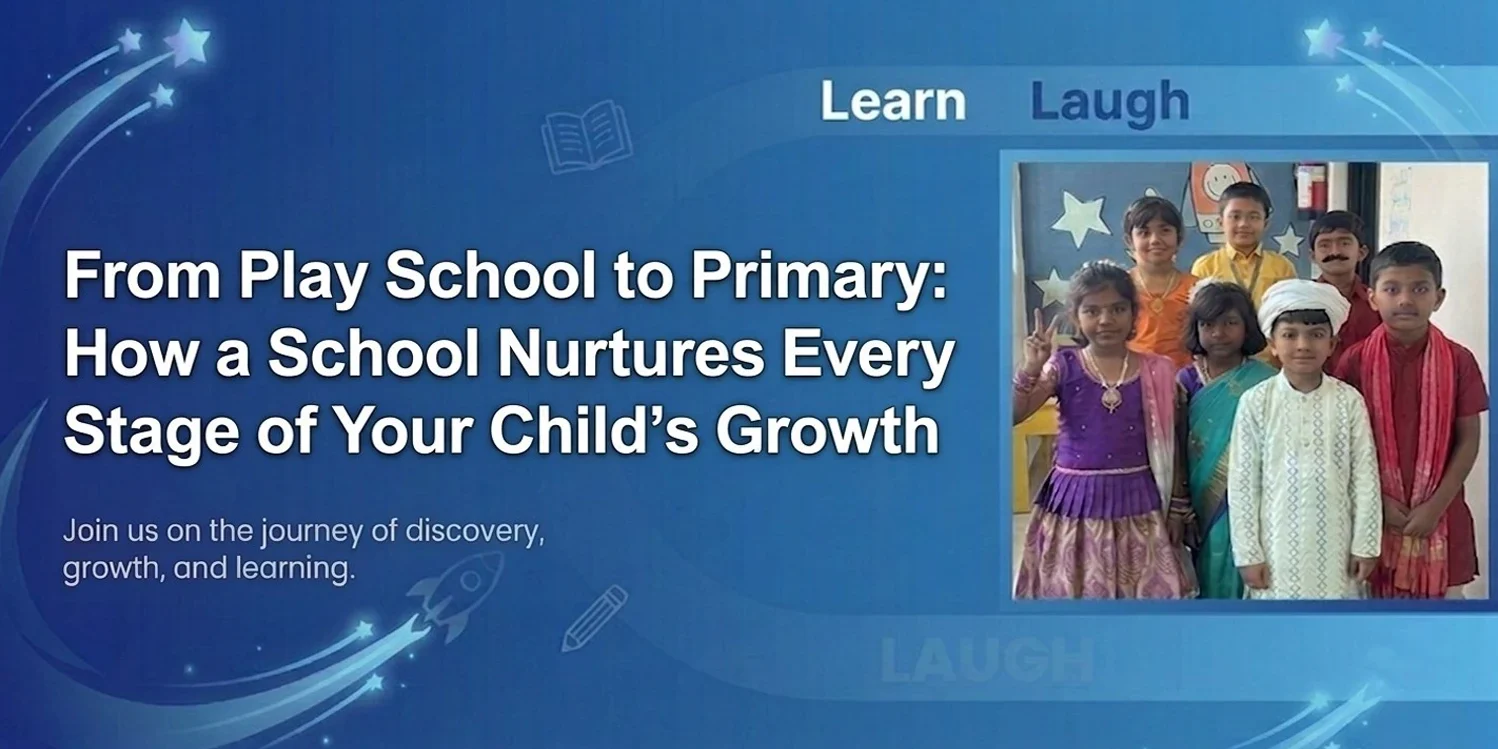
The transition from play school to primary school is an important stage in every child’s learning journey. During these years, children begin to move from free exploration to more structured learning experiences. Curiosity turns into understanding, confidence begins to grow, and children slowly adapt to the rhythm of school life.
For parents, this stage often raises an important question. Which school environment can truly support a child’s development during these formative years?
A good school understands that early education is not only about preparing children academically. It is about nurturing curiosity, encouraging expression, and helping children feel secure as they begin their learning journey. When these foundations are built with care, children step into primary school with confidence and enthusiasm.
Across Chennai, parents searching for the best kindergarten schools in Tambaram, exploring nursery admission in Kottivakkam, or considering kindergarten admissions in ECR and OMR are often looking for exactly this kind of nurturing environment. They want a place where children are guided gently from early play-based learning to the structured experiences of primary school.
Why the Early Years Matter
The early years form the foundation of a child’s future learning. During this time, children develop essential abilities that shape how they think, communicate, and interact with others.
Young learners are naturally curious. They observe closely, ask questions, and learn best when they can explore ideas through real experiences.
A supportive early learning environment helps children:
- Express their ideas and thoughts confidently
- Develop listening and communication skills
- Explore their surroundings through hands-on experiences
- Build friendships and social awareness
- Feel safe and comfortable within the classroom
These early experiences influence how children view school. When learning is introduced in a supportive and engaging way, children develop a positive relationship with education that continues through the primary years.
Play-Based Learning Creates Meaningful Experiences
Play is one of the most effective ways young children understand the world. Through play, children test ideas, experiment with materials, and develop their imagination.
Many parents searching for the best school in nearby neighbourhoods often prioritise schools that integrate play-based learning into the early years curriculum.
Play-based learning may include activities such as:
- Storytelling and imaginative role play
- Building and construction activities
- Art, music, and creative expression
- Group games that encourage cooperation
- Outdoor exploration and observation
These experiences help children build language, creativity, and problem-solving abilities while keeping learning joyful and engaging.
Instead of feeling pressured, children develop skills naturally through curiosity and exploration.
Building Strong Foundations in Language and Literacy
Language development plays a central role in early childhood education. When children are encouraged to listen, speak, and participate in conversations, they gradually build the foundations needed for reading and writing.
Schools that focus on literacy development often include activities such as:
- Listening to stories and discussing them
- Singing rhymes and engaging in conversations
- Learning phonics to recognise sounds and letters
- Expanding vocabulary through storytelling
- Introducing sight words gradually
Phonics is especially helpful in helping children understand how sounds connect with letters. Rather than memorising words, children learn to recognise patterns in language and decode words independently.
These early literacy experiences make it easier for children to transition into formal reading and writing during primary school.
Developing Numeracy Through Exploration
Numeracy skills begin long before formal mathematics lessons start. Young children naturally encounter numbers in everyday situations.
Counting toys, recognising patterns, sorting objects, and comparing sizes are all early numeracy experiences that help children build mathematical understanding.
A well-designed classroom environment introduces numeracy through:
- Songs and rhythm-based counting activities
- Hands-on learning with manipulatives
- Sorting and grouping exercises
- Games that encourage logical thinking
- Everyday examples that connect numbers with real life
When children learn numbers through exploration and experience, they develop a deeper understanding of mathematical ideas.
This approach prepares them well for the more structured mathematics learning that takes place in primary school.
Supporting Social and Emotional Growth
While academic learning is important, emotional development plays an equally vital role in a child’s success.
Children need opportunities to understand their feelings, develop friendships, and learn how to work together with others.
Social and emotional learning helps children develop important life skills, including:
- Self-awareness and confidence
- Positive communication with peers
- Respect for different perspectives
- Empathy and kindness
- The ability to cooperate in group activities
A nurturing classroom environment supports these skills through daily interactions, guided conversations, and collaborative activities.
Parents searching for kindergarten admissions in ECR and OMR or nearby areas often prioritise schools that support both academic learning and emotional development. This balanced approach helps children grow into confident and thoughtful learners.
Preparing Children for Primary School
The transition from play school to primary school should feel like a natural progression rather than a sudden shift. Schools that thoughtfully design their early learning programmes help children adapt comfortably to this change.
Children who experience balanced early education often develop:
- Confidence in participating in classroom discussions
- Early literacy and numeracy skills
- The ability to follow routines and instructions
- Independence in completing simple tasks
- Social skills needed to work with peers
These abilities make the move into primary school smoother and less overwhelming.
Parents looking for the best kindergarten schools in Tambaram often consider schools that offer a clear pathway from early learning to primary education.
Choosing the Right School for Your Child
Every child learns differently. The right school recognises this individuality and creates an environment where children can grow naturally.
When choosing a good school for early education, parents often look for:
- A nurturing and safe environment
- Teachers who understand early childhood development
- Balanced learning that combines play and structure
- Opportunities for creativity and exploration
- A smooth transition into primary school
Families exploring options such as the best school in Padur often prioritise these factors when selecting the right learning environment for their child.
A Journey That Begins with Care
The journey from play school to primary school is more than an academic transition. It is a stage where children develop confidence, curiosity, and a sense of belonging. When these early years are guided with care, children begin their schooling experience with enthusiasm and a genuine love for learning.
At Shraddha Children’s Academy, the early years are nurtured through Shraddha Little Champs, the school’s dedicated kindergarten programme. From play-based exploration to the first steps into structured primary learning, the focus is on creating an environment where young learners feel supported, curious, and confident as they grow.
FAQs
1. Why are the early years of schooling important for children?
The early years help build foundational skills in language, numeracy, communication, and emotional development. These skills influence how children approach learning throughout their education.
2. What is play-based learning and why is it important?
Play-based learning allows children to explore ideas through games, storytelling, and hands-on activities. It encourages creativity, curiosity, and problem-solving.
3. What should parents look for when choosing a kindergarten school?
Parents should consider factors such as a nurturing environment, experienced teachers, balanced learning methods, safety, and a clear pathway to primary education.
4. How does phonics help children learn to read?
Phonics helps children understand the relationship between sounds and letters. This approach allows them to decode words and build reading confidence gradually.
5. How do schools prepare children for primary education?
Schools introduce structured learning gradually while continuing to encourage exploration and play. This helps children adapt comfortably to new routines and expectations.
6. When should parents start exploring nursery admission options?
Many parents begin researching schools during the early preschool years to understand admission timelines and identify the right environment for their child.